If you've walked around your home lately and noticed that one side, usually the north-facing side, looks greener and grimier than the rest, you're in good company. It's one of the most common things South Shore homeowners ask us about. The whole house got the same paint, the same siding, and the same weather, so why is only one wall turning green?
Here's the reassuring part: it almost never means your siding is ruined. That green tint is usually organic growth, a thin film of algae, mildew, and buildup that thrives where there's moisture, shade, and not enough sunlight to dry things out. It's a maintenance issue, not a damage issue, and it cleans up well when it's done the right way.
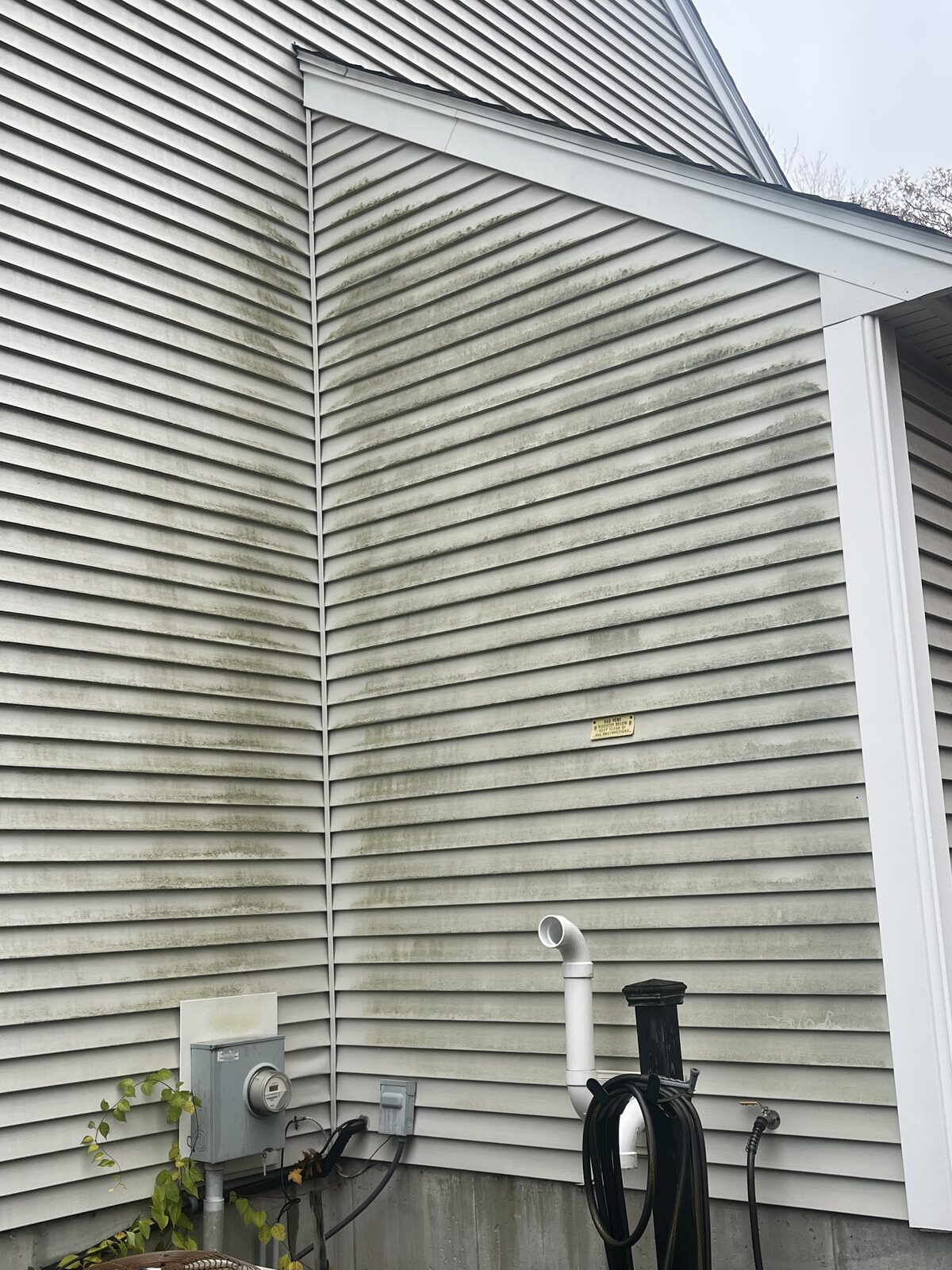
Why the North Side Gets Green First
It comes down to sun and moisture. The north side of a house in Massachusetts gets the least direct sunlight all year, and sunlight is what dries a wall out and keeps growth from taking hold.
- Less direct sunlight, the north face is in shade for most of the day, so it never fully bakes dry.
- It stays damp longer, after rain, morning fog, humidity, sprinklers, and our coastal moisture, that side holds dampness for hours longer than the sunny sides.
- Shade from trees makes it worse, mature trees and shrubs near the house block what little sun the wall would get and trap humidity against the siding.
- Damp + shade = fast growth, algae, mildew, and organic buildup spread quickly in exactly these cool, moist, low-light conditions.
On the South Shore, where ocean air keeps humidity high even on clear days, this happens faster than it does inland. It's why a perfectly cared-for home in Marshfield or Scituate can still get a green north wall while the front of the house looks great.
Is the Green Stuff Mold, Mildew, or Algae?
Most of the time, the green you're seeing on siding is algae or a mildew-like organic growth, the same family of stuff that turns decks and patios green. People often call all of it "mold," and the everyday labels get used interchangeably.
The honest answer is that the exact name matters a lot less than getting it cleaned off properly and safely. We're not here to make any health claims about what's growing on your wall. What we can tell you is that it feeds on moisture and organic film, it will keep spreading if it's left alone, and it responds very well to the right cleaning method.
Can You Just Pressure Wash It Off?
This is the big one, and it's where a lot of well-meaning homeowners get into trouble. It's tempting to grab a pressure washer, crank it up, and blast the green away. On vinyl siding, trim, soffits, and painted surfaces, high pressure is the wrong tool.
Too much pressure can:
- Force water up behind the siding panels, where it has no easy way to dry out.
- Crack or warp older or sun-brittled vinyl.
- Leave streaks and uneven "clean lines" that look almost worse than the green did.
- Disturb the caulk and seals around windows, doors, and trim.
⚠ Pressure Doesn't Kill the Growth Anyway
Even when high pressure blasts the green off the surface, it doesn't treat the organic growth at the root, so it tends to come back fast. The fix is a cleaning solution that does the work, not raw force. We break down the difference in our soft washing vs pressure washing guide.
The Safe Way to Clean Green Siding
For siding, the right approach is soft washing, low pressure paired with a cleaning solution that actually breaks the organic growth down. Here's how we handle it at H2WOAH:
- Inspect first, we look over the siding and the areas around it to spot loose trim, open seals, brittle vinyl, and the worst of the buildup.
- Pre-rinse and protect plants, we wet down and shield landscaping and greenery near the work area when needed.
- Apply the correct soft wash solution, mixed for your siding type so it cleans effectively without harsh, damaging pressure.
- Let it dwell, we give the solution time to break the algae and organic growth down so it releases from the surface.
- Rinse with low pressure, a gentle, even rinse carries the buildup away without forcing water behind the panels.
- Detail the trouble spots, we work the areas around trim, gutters, and windows so the whole wall comes clean evenly, not just the easy-to-reach parts.
Done this way, that green north wall comes back to matching the rest of the house, and it stays clean a lot longer than a quick blast with a pressure washer ever would.
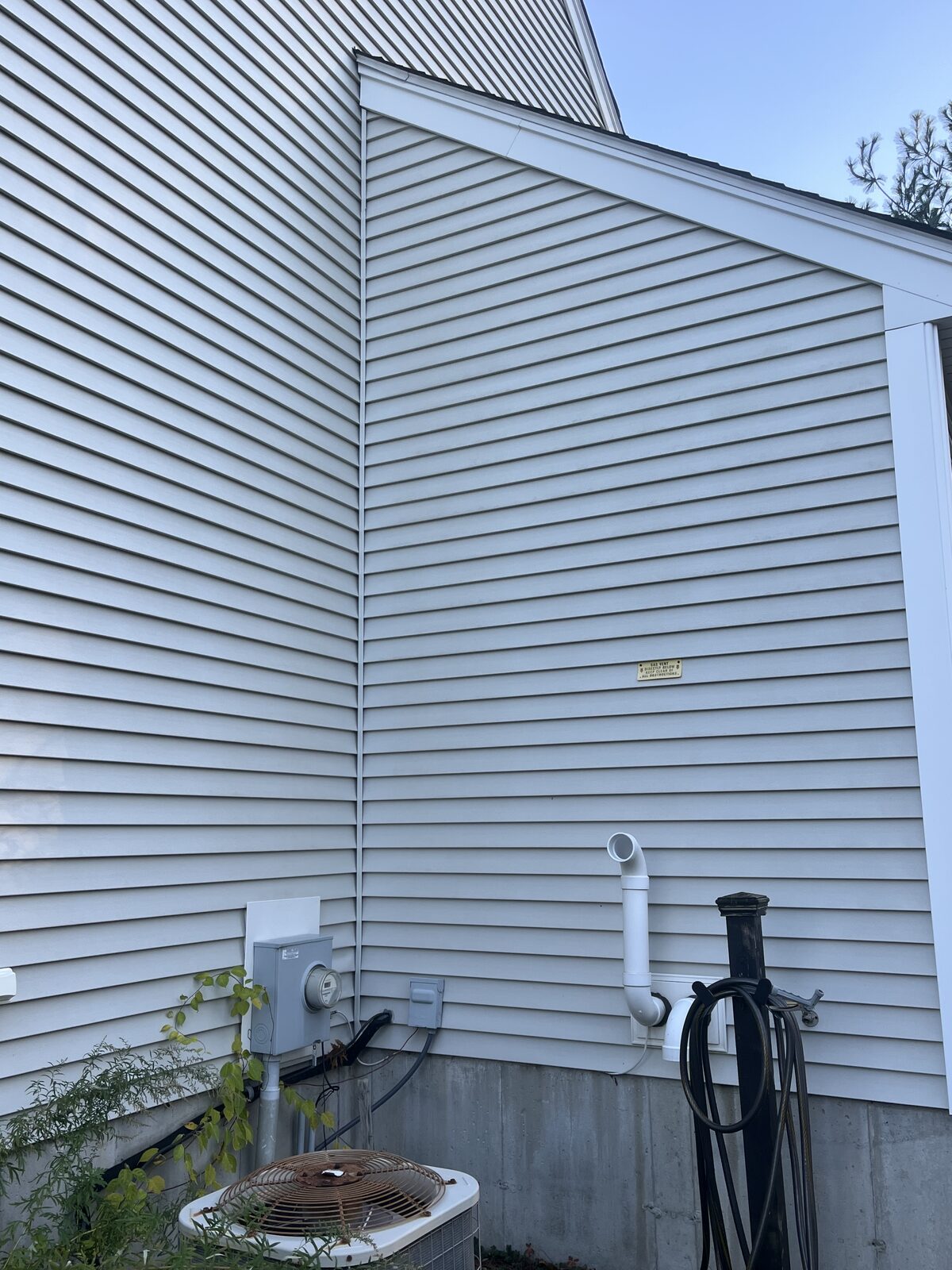
Will the Green Come Back?
Eventually, yes, and that's normal. Exterior cleaning is maintenance, not a one-time permanent seal. Because the north side stays damp and shaded, organic growth will return there sooner than on the sunny sides of the house, that's just the nature of that wall.
Most South Shore homes do well with a house washing every 1 to 2 years, depending on shade, nearby trees, moisture, and how close you are to the water. Homes tucked into wooded lots or right along the coast may want the damp side touched up a little more often. We dig into the timing in our guide on how often you should clean vinyl siding.
When to Call a Professional
Plenty of small spots are fine to keep an eye on. It's worth bringing in a pro when:
- The green staining covers large areas or a whole side of the house.
- The home is two stories or otherwise hard to reach safely.
- There's buildup around windows, trim, gutters, or soffits.
- You'd rather not risk damaging the siding with the wrong pressure or product.
- You want the house cleaned evenly, not left with streaks and clean lines.
A professional house washing gets the whole exterior looking consistent, ladders and all, without putting your siding or your back at risk.
House Washing on the South Shore
H2WOAH is local, and the South Shore's shady, coastal, tree-lined neighborhoods are exactly where we work every week. We provide soft washing and house washing in Marshfield, Scituate, Duxbury, Hingham, Norwell, Hanover, Pembroke, Cohasset, Weymouth, Braintree, Quincy, Plymouth, and the surrounding South Shore towns.
📷 Got a Green Wall? Send Photos
If the north side of your house is turning green, send us a few photos for a fast online quote. H2WOAH provides soft washing and house washing across the South Shore.
Frequently Asked Questions
Why is only one side of my house green?
Usually it's the side that gets the least sun and stays damp the longest, most often the north-facing wall. Less sunlight means moisture from rain, fog, humidity, and coastal air lingers, which lets algae and mildew-like growth take hold faster than on the brighter, drier sides of the home.
Can I pressure wash green vinyl siding myself?
High pressure isn't the right tool for vinyl siding. It can force water behind panels, crack older vinyl, leave streaks, and disturb the seals around windows and trim. Green vinyl siding is best cleaned with low-pressure soft washing and the correct solution that breaks the organic growth down at the source.
How often should I clean my siding in Massachusetts?
Most South Shore homes benefit from a house washing every 1 to 2 years. Shaded, tree-lined, or coastal homes may need the damp, north-facing side cleaned a bit more often because the green tends to return there first.
Is soft washing safe for vinyl siding?
Yes. Soft washing uses low pressure and a cleaning solution that does the work instead of brute force, so it cleans vinyl, trim, soffits, and painted surfaces effectively without the damage risk that comes with high-pressure washing.